

In the world of fine dining, few ingredients command the same reverence and quiet intimidation as abalone. A jewel of the sea, it graces the most significant celebratory tables in Singapore, yet its prestigious status and considerable price can make the prospect of preparing it at home feel daunting. The fear of a costly misstep, a confusion of choices between glistening canned varieties and prized live specimens, often keeps this exquisite experience just out of reach for even the most ambitious home chef.
Consider this your curated guide to mastering this treasured delicacy. We will seamlessly navigate you through the nuances of selecting the perfect type for your occasion, illuminate its deep-rooted cultural heritage, and unveil a simple yet impressive preparation method. By the end, you will not only possess the confidence to serve this symbol of prosperity with grace but also the quiet satisfaction of having made a worthy investment in an unforgettable dining experience for your home sanctuary.
Key Takeaways
- Confidently select the perfect type for your occasion by understanding the distinct qualities of canned, fresh, and dried varieties available in Singapore.
- Master the art of preparing this treasured delicacy with our simple, step-by-step instructions that remove all guesswork and ensure exquisite results.
- Discover how to craft an elegant celebration menu, perfectly balancing complementary flavours to elevate your abalone centerpiece.
- Learn the revered status of this delicacy in local heritage and how it contrasts with other wellness luxuries for a balanced lifestyle.
What is Abalone and Why is it Revered in Singapore?
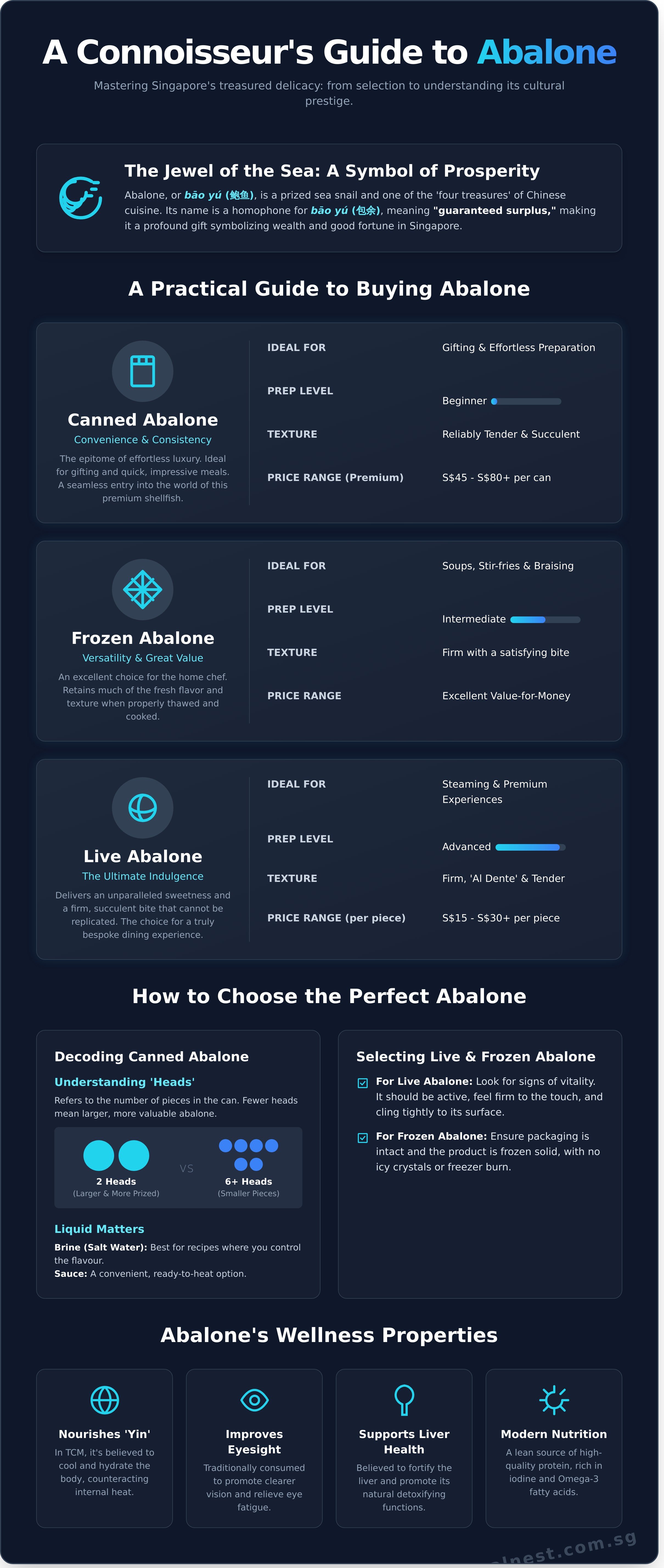
More than a mere delicacy, abalone is an emblem of prestige and culinary artistry. This prized sea snail, a type of marine gastropod mollusc, holds an esteemed position as one of the 'four treasures' of Chinese cuisine, alongside sea cucumber, shark's fin, and fish maw. To fully appreciate its status, it's helpful to understand what is abalone from a biological perspective, as its slow growth and harvesting challenges contribute to its value. In Singapore, its significance deepens, becoming an almost essential feature of celebratory meals, especially during Chinese New Year.
This reverence is woven into the very fabric of language and tradition. The Mandarin name for abalone, bāo yú (鲍鱼), is a homophone for bāo yú (包余), which translates to "guaranteed surplus." Gifting or serving this exquisite ingredient is therefore a profound gesture, symbolising a wish for abundance, wealth, and good fortune for the year ahead.
The Taste and Texture of Abalone
The palate of a premium abalone is a study in subtlety and elegance. It offers a gentle, sweet flavour with a clean, briny character that evokes the pure essence of the ocean. When prepared with masterful precision, its texture is its crowning glory: a perfect tension between a firm, 'al dente' bite and a yielding tenderness that melts in the mouth. While farmed varieties offer a consistently mild and pleasant taste, wild-caught specimens are often celebrated for their more complex flavour profile and a distinctly richer, more robust texture.
Health Benefits Rooted in Tradition
Beyond its symbolism and exquisite taste, abalone is highly valued in Traditional Chinese Medicine (TCM) for its restorative properties. It is believed to be a powerful tonic for overall wellness, with a reputation for:
- Nourishing 'yin': Helping to cool and hydrate the body, counteracting internal heat.
- Improving Eyesight: Traditionally consumed to promote clearer vision and relieve eye fatigue.
- Supporting Liver Health: Believed to fortify the liver and promote its detoxifying functions.
Modern nutritional science complements these traditional beliefs, highlighting that abalone is a lean source of high-quality protein, rich in iodine for thyroid function, and contains beneficial omega-3 fatty acids.
A Practical Guide to Buying Abalone in Singapore
For the discerning palate, navigating the world of abalone in Singapore is a rewarding journey. This treasured delicacy, celebrated for its exquisite texture and subtle oceanic sweetness, is available in three distinct forms, each offering a unique culinary experience. Understanding these options allows you to curate the perfect dining moment, whether for a festive celebration or a quiet, luxurious meal at home.
- Canned Abalone: The epitome of convenience and consistency. Ideal for gifting and effortless preparation, trusted brands like New Moon and Golden Chef offer a reliably tender product. It provides a seamless entry point into the world of this premium shellfish.
- Frozen Abalone: A versatile and excellent value choice for the home chef. It retains much of the fresh flavour and texture when properly thawed, making it perfect for soups, stir-fries, and braised dishes that require more hands-on preparation.
- Live Abalone: The ultimate indulgence. Sourced from pristine waters, live abalone delivers an unparalleled sweetness and a firm, succulent bite that cannot be replicated. It is the choice for a truly bespoke dining experience.
Choosing Canned Abalone: What the Labels Mean
Decoding the information on a can is key to selecting the perfect product. The number of 'heads' refers to the quantity of abalone in the can; a smaller number, such as '2 heads', indicates larger and more valuable pieces. The liquid is also crucial: brine (salt water) is best for recipes where you control the flavour, while rich sauces offer a convenient, ready-to-heat option. The country of origin also matters, as the unique marine environments of regions like Mexico and Australia yield distinct characteristics across different abalone species, influencing their final texture.
Selecting Fresh and Frozen Abalone
When purchasing live abalone, look for signs of vitality-it should be active and feel firm to the touch, clinging tightly to its surface. For frozen varieties, ensure the packaging is intact and the product is frozen solid, with no icy crystals or signs of freezer burn, which can compromise its delicate texture. In Singapore’s wet markets or premium seafood suppliers, expect to invest S$15-S$30 per piece for live abalone, while premium canned options often range from S$45-S$80. This investment secures an exquisite taste of the ocean, a true centrepiece for any meal.
How to Prepare and Cook Abalone: A Beginner's Guide
The exquisite abalone, a prized delicacy in Asian cuisine, often carries an air of intimidation for the home cook. Its premium price can create a fear of improper preparation, but we believe that creating a sanctuary of flavour in your own kitchen should be a seamless and rewarding experience. With a few foundational techniques, you can confidently unlock the subtle, buttery notes of this marine treasure and transform it into a dish worthy of celebration.
Preparing Live and Frozen Abalone
The journey to a perfectly tender result begins with meticulous preparation. Understanding the dense muscle structure-you can find detailed scientific information on abalone from marine biologists-is the key to avoiding a rubbery texture. Follow these simple steps:
- Shuck with Care: Slide a sturdy spoon or a butter knife between the abalone meat and the flat side of its shell. Gently work your way around to pry the muscle free.
- Clean Thoroughly: Trim away the dark, tough viscera. Using a clean toothbrush or vegetable brush, scrub the meat and the frilly "skirt" under cool running water to remove any dark film until it appears pale.
- Tenderise Gently: Place the cleaned abalone on a cutting board and cover it with a cloth or plastic wrap. Lightly pound the meat with a mallet or the back of a heavy knife. This crucial step breaks down the tough fibres, ensuring a melt-in-your-mouth texture.
A Simple Recipe: Braised Abalone with Shiitake Mushrooms
This classic, elegant recipe is remarkably accessible and uses ingredients readily available in Singapore. The slow braise coaxes out a deep, umami-rich flavour that complements the delicate abalone perfectly.
Ingredients:
- 4-6 prepared abalones (fresh, frozen, or canned)
- 6-8 dried shiitake mushrooms, rehydrated (reserve the water)
- 2 tbsp oyster sauce
- 1 tbsp light soy sauce
- 1 tbsp Shaoxing wine
- 1 tsp sugar
- 2 slices of ginger
- 1 stalk of spring onion, cut into sections
- 1 tbsp cornstarch mixed with 2 tbsp water (for thickening)
Instructions:
- In a pot, gently sauté the ginger and spring onion in a little oil until fragrant.
- Add the oyster sauce, soy sauce, Shaoxing wine, sugar, and one cup of the reserved mushroom water. Bring to a gentle simmer to create the braising liquid.
- Add the prepared abalone and rehydrated shiitake mushrooms. Ensure they are mostly submerged. Cover the pot and reduce the heat to low.
- Simmer for 45-60 minutes (for fresh/frozen) or until the abalone is tender enough to be pierced easily with a fork.
- Remove the abalone and mushrooms. Thicken the remaining sauce with the cornstarch slurry, stirring until it becomes a glossy gravy.
For an impressive presentation, slice the abalone and arrange it over a bed of the shiitake mushrooms and blanched bok choy. Drizzle the rich, flavourful sauce over the top, creating a truly memorable centrepiece for your dining table.
Pairing Abalone: Crafting a Luxurious Celebration Menu
For moments that call for true celebration, the dining experience should be nothing short of magnificent. At the heart of such an occasion lies a centerpiece that speaks of heritage, prestige, and exquisite taste. This is the role masterfully played by premium abalone, a delicacy revered for its tender, succulent texture and deep, savoury flavour. Crafting a menu around this treasure of the sea is an art form, a bespoke gesture that honours your guests and elevates the entire event.
For inspiration on how premier restaurants create these memorable seafood experiences, you can learn more about Baan Dum Oceanfront Seafood.
Savoury Companions for Abalone
The key to a harmonious menu is balance. While the rich, umami profile of the abalone is the star, its companions should complement, not compete. Traditional pairings create a symphony of textures and tastes that are both opulent and refined. Consider these classic additions:
- Sea Cucumber & Fish Maw: These delicacies share a similar prestige and absorb the rich flavours of the braising sauce, offering a delightful textural contrast.
- Premium Mushrooms: Shiitake or flower mushrooms lend an earthy depth that beautifully grounds the oceanic notes of the main dish.
- Steamed Greens: To cleanse the palate between bites, introduce fresh, vibrant greens like Kai Lan, broccoli, or asparagus. Their crispness provides a welcome counterpoint to the meal's richness.
The entire ensemble is brought together by a superior-quality broth or sauce, simmered for hours to achieve a perfect, flavourful viscosity that coats every ingredient.
To complete the experience, a sophisticated beverage pairing is essential. While wine is traditional, a fine single malt Scotch whisky can serve as an excellent digestif, its complexity matching the richness of the feast. For those who appreciate the heritage and value of such spirits, platforms like the Whisky Cask Club even offer a way to invest in the casks themselves, turning a passion for fine drinks into a tangible asset.
Of course, no celebration menu is complete without the right beverages. While fine wines are a classic choice, a growing trend is to pair rich dishes with artisanal, nature-inspired drinks that cleanse the palate. For those looking for unique options from pristine environments, you can visit Aroha Drinks for inspiration on premium New Zealand-crafted beverages.
Following this global trend of unique beverage pairings, those interested in the rich herbal traditions of the Caribbean can explore the premium Jamaican tea blends from Rastaman Stew, which offer a different but equally compelling approach to wellness and flavour.
The Perfect Finale: Bird's Nest Dessert
After a course so profoundly rich and savoury, the ideal conclusion is one of lightness and tranquility. This is where bird's nest dessert offers a seamless and elegant transition. Its delicate, clean flavour and smooth, gelatinous texture serve as a perfect palate cleanser, gently washing away the preceding richness without overwhelming the senses.
More than just a dessert, serving bird’s nest is a profound expression of care. Known for its nourishing and restorative properties, it concludes the meal on a note of wellness and thoughtful hospitality. The pairing of a sumptuous main course with a light, healthful bird's nest finale represents the pinnacle of luxury dining-a curated experience designed to create a lasting memory of warmth and prestige for your cherished guests.
Discover more ways to create moments of elevated living and explore our curated selection at royalnest.com.sg.
Beyond the Feast: Embracing Daily Wellness with Bird's Nest
While treasured delicacies like premium abalone grace our tables during momentous celebrations, representing prosperity and familial bonds, the pursuit of wellness is a quieter, more consistent journey. This is where the subtle luxury of bird's nest finds its true purpose, transforming from a festive treat into a daily ritual of profound self-care, perfectly suited for a modern, aspirational lifestyle.
Unlike the elaborate preparation required for a celebratory dish, bird's nest offers an accessible pathway to sustained vitality. It is a commitment to nurturing your body from the inside out, rewarding you with a luminous complexion and a renewed sense of energy that builds day by day. This is not about a single feast, but about weaving a thread of exquisite nourishment into the fabric of your everyday life.
A Daily Ritual of Self-Care
Imagine beginning each day not with a rush, but with a moment of serene indulgence. Integrating freshly brewed bird's nest into your morning routine is an elegant commitment to your inner vitality, working seamlessly to support your beauty and wellness goals. This simple act upholds the same reverence for tradition and quality found in prized delicacies like abalone, making exquisite health an effortless part of your contemporary life.
Experience Exquisite Freshness, Delivered
At Royal Bird's Nest, we honour this desire by delivering an unparalleled experience directly to your sanctuary in Singapore. Our bird's nest is always freshly brewed to order, using only the finest, ethically sourced nests and pure rock sugar, with no preservatives or artificial additives. This promise ensures every jar is a vessel of uncompromising purity and potency, ready to elevate your wellness journey. Discover the nourishing luxury of freshly brewed bird's nest.
From Celebratory Feasts to Everyday Elegance
You are now equipped with the knowledge to transform any occasion into a momentous feast. From discerning between different types of this treasured delicacy to mastering the art of preparation, this guide empowers you to honour tradition with confidence. Mastering the revered abalone is more than a culinary skill; it is about creating cherished memories and celebrating life’s milestones with unparalleled taste.
Creating these cherished memories often goes beyond the food itself, stemming from the quality of our connections with loved ones. For those looking to deepen these bonds through greater self-awareness and emotional intelligence, you can discover EQ World.
While such grand celebrations nourish the spirit, the pursuit of well-being is a daily ritual. We invite you to extend this philosophy of care into your everyday routine. Explore our collection of exquisite, freshly brewed bird's nest. Each jar is a promise of purity-freshly brewed to order in Singapore using only 100% pure ingredients with no preservatives, and brought to your sanctuary with our complimentary island-wide delivery.
Here’s to a life enriched by both extraordinary celebrations and the quiet luxury of daily self-care.
Frequently Asked Questions
How much does abalone cost in Singapore?
The price of abalone in Singapore varies, reflecting its origin and preparation. A can of premium braised abalone can range from S$40 to over S$120, depending on the size, number of pieces, and country of origin like Australia or Mexico. Fresh abalone is often priced per 100 grams and can be a significant investment. This delicacy is considered a worthwhile indulgence for special occasions, representing a taste of true culinary luxury and prestige.
Is canned abalone as good as fresh abalone?
Both canned and fresh abalone offer an exquisite experience, tailored to different culinary expressions. Canned abalone is prized for its convenience and tender, succulent texture, having been expertly braised in a flavourful brine. Fresh abalone presents a firmer, chewier bite and a more subtle oceanic sweetness, ideal for quick steaming or stir-frying. The choice depends entirely on the dining experience you wish to curate, as each form possesses its own unique and celebrated charm. For those who prefer to enjoy this delicacy without the preparation, you can find out more about professionally curated seafood feasts.
What does abalone taste like?
Abalone possesses a unique and sophisticated flavour profile that is unlike any other seafood. It is not fishy, but rather subtly sweet with a delicate, briny essence reminiscent of the pure ocean. Its most celebrated quality is its texture-a luxurious, satisfying chewiness that is both firm and tender. This combination of a gentle umami taste and a remarkable mouthfeel is what makes abalone a highly sought-after delicacy for discerning palates around the world.
What is the best way to cook canned abalone?
The beauty of canned abalone lies in its readiness; it is already exquisitely cooked. The best approach is to gently heat it to preserve its tender texture. You can warm the abalone slices in their own flavourful brine over low heat. For an elevated dish, create a simple, elegant sauce by thickening the brine with a cornstarch slurry and a touch of oyster sauce, then gently pour it over the warmed slices and serve with blanched greens.
Can you eat abalone raw like sashimi?
Yes, but this preparation is exclusively for exceptionally fresh, sashimi-grade abalone sourced from a trusted purveyor. When served raw, abalone has a firm, almost crunchy texture and a clean, sweet taste of the sea. It is a true delicacy that showcases the ingredient in its purest form. However, for safety and the best experience, it is crucial to ensure the abalone is specifically intended for raw consumption, as not all fresh varieties are suitable.
How do you store leftover abalone?
To preserve the integrity of leftover abalone, proper storage is essential. Immediately transfer any unused portions from the can into a clean, airtight glass or plastic container. Be sure to include the brine, as this will keep the abalone moist and flavourful. Store it in the coldest part of your refrigerator and aim to enjoy it within two to three days to experience its optimal taste and texture. This ensures your investment in quality is savoured to the last bite.
Why is abalone so important for Chinese New Year?
Abalone is a cornerstone of Chinese New Year feasts due to its profound symbolism of wealth and prosperity. In Mandarin, its name (bào yú, 鲍鱼) sounds like "assurance of surplus" (bāo yǒuyú, 包有余), signifying a wish for abundance in the year ahead. Serving this prestigious delicacy is a gesture of honour towards guests and family, embodying aspirations for good fortune, status, and a year filled with success. It transforms a meal into a meaningful, heritage-rich celebration.