

What if the most sought-after elixir for wellness wasn't a synthetic compound, but a meticulously crafted gift from nature? In the bustling heart of Singapore, many health-conscious individuals are rediscovering the profound benefits of this ancient delicacy, yet a lingering question often remains: what is bird's nest made of? It's a curiosity born from a mix of wonder and a slight hesitation regarding its biological origins.
You might feel a touch of skepticism when you hear it described as bird saliva, or perhaps you find yourself confused between the common nests in your garden and these prized edible treasures. It's completely natural to seek clarity before embracing a new ritual for your wellbeing. This guide promises to demystify the fascinating science behind the swiftlet's creation, revealing why its unique composition of glycoproteins and sialic acid makes it a true biological marvel. We will explore the intricate process of nest formation, examine the specific nutrients that support your vitality, and provide you with the knowledge to distinguish a genuine, hand-picked nest from the chemically treated imitations often found in the market.
Key Takeaways
- Understand the elegant biological process where swiftlets use pure salivary secretions to create a sanctuary, a far cry from the mud and twigs of common nests.
- Discover exactly what is bird's nest made of by exploring its complex matrix of glycoproteins, sialic acid, and essential minerals that support your vitality.
- Protect your wellness by learning how to identify bleached or adulterated nests, ensuring you only bring the highest quality ingredients into your home.
- Appreciate the meticulous manual craftsmanship required to purify each nest, a process that preserves its natural integrity without the use of harsh chemicals.
- Learn why freshly brewed preparations are the gold standard for maintaining the delicate bio-active properties that define this prestige superfood.
The Biological Origin: How Swiftlets Create Edible Bird's Nests
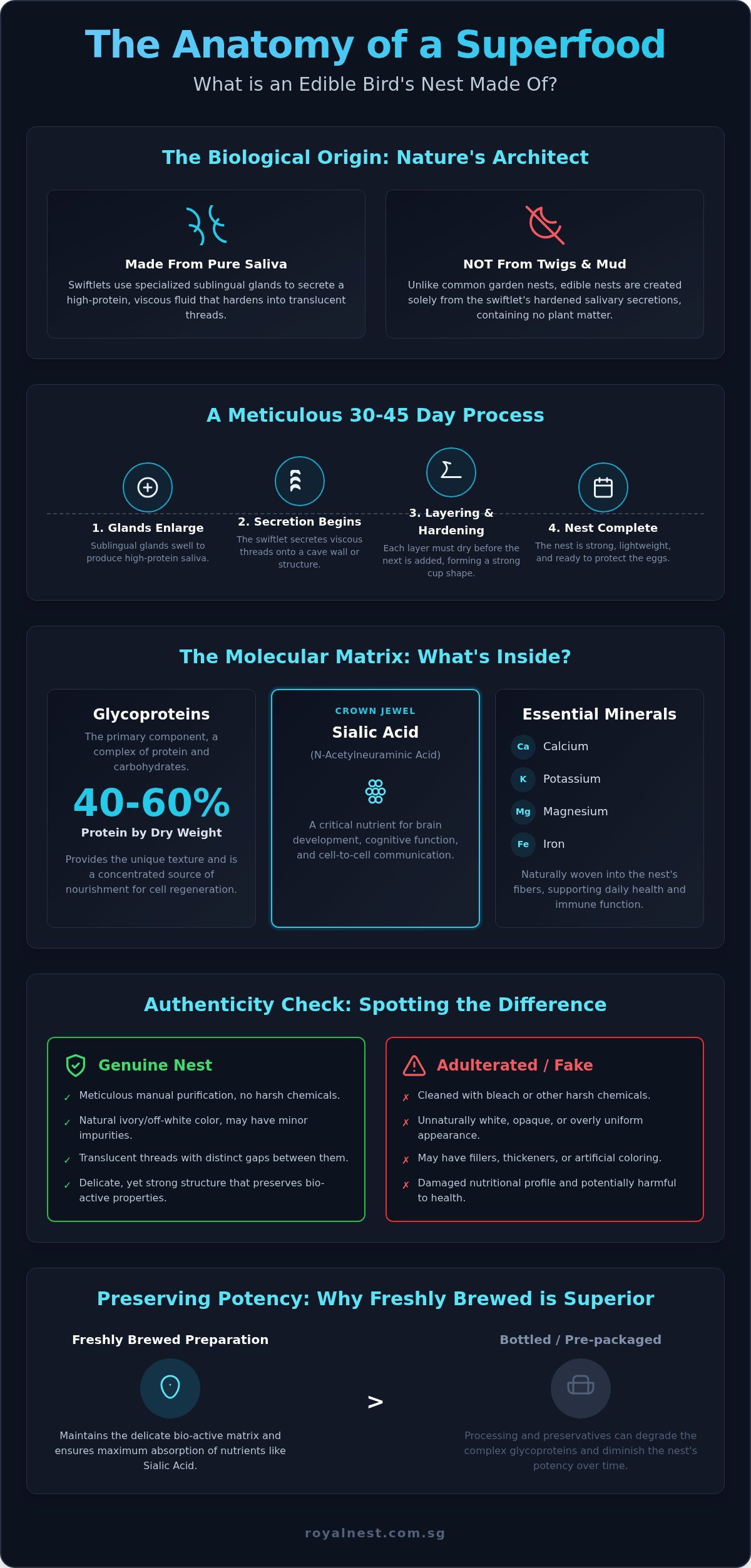
The swiftlet is a remarkable architect of the natural world. Unlike the birds we see in Singapore's gardens that gather twigs, mud, or dried grass, the Aerodramus fuciphagus relies entirely on its own biology to craft a home. If you've ever wondered what is bird's nest made of, the answer lies in a specialized secretion that represents one of nature's most pure forms of craftsmanship. An edible bird's nest is a hardened cement of salivary glycoproteins. This unique structure isn't just a home; it's a meticulously built sanctuary designed to protect the next generation in the challenging environments of Southeast Asia.
The Swiftlet's Specialized Salivary Glands
As the breeding season approaches, the swiftlet undergoes a physical transformation. Its sublingual glands, located beneath the tongue, increase in size significantly to prepare for the monumental task of nest building. These glands produce a high-protein, viscous fluid that is rich in nutrients. This isn't typical saliva; it's a bio-active substance that begins as a liquid but hardens into a solid, translucent thread upon contact with the air. Biologically, this secretion serves as a protective, antimicrobial cradle. It acts as a natural barrier against environmental bacteria, ensuring that the eggs remain safe from pathogens while providing a sturdy, secure base for the chicks to grow until they are ready for flight.
Nest Construction: Nature's Architecture
The creation of an Edible bird's nest is a labor of love that requires immense patience and precision. Swiftlets typically build these structures in the sheltered darkness of limestone caves or in carefully managed swiftlet houses across the region. The process is slow and deliberate, taking approximately 30 to 45 days of continuous secretion and layering.
Each layer must dry before the next is added, eventually forming a distinctive crescent-shaped cup that clings firmly to the rock wall. This architectural marvel is incredibly strong, capable of supporting the weight of the bird and its young, yet it remains remarkably lightweight. It's a testament to the bird's endurance and the quality of the organic material it produces.
When we consider the question of what is bird's nest made of, we aren't just looking at a list of ingredients; we are witnessing a month-long biological process that distills the essence of the swiftlet's vitality into a physical form. This steady, rhythmic construction ensures the nest's structural integrity, mirroring the care and attention we value in our own homes. The result is a prestigious material that has been celebrated for centuries, not just for its scarcity, but for the life-giving properties woven into its very foundation.
The Chemical Breakdown: What's Actually Inside the Nest?
To truly appreciate the value of this delicacy, we must look past its delicate appearance and examine its molecular reality. When people ask what is bird's nest made of, they're often surprised to find a sophisticated matrix of bio-active compounds rather than simple collagen. The primary component is glycoproteins, a complex union of proteins and carbohydrates that provides the nest with its unique texture and nutritional profile. Scientific studies on the nutritional and chemical composition of these nests reveal that they contain approximately 40-60% protein by dry weight, making them an exceptionally concentrated source of nourishment.
This organic structure is also rich in essential minerals that are vital for daily health, including calcium, potassium, magnesium, and iron. These aren't just additives; they're naturally woven into the nest's fibers during its creation. This combination of nutrients creates a powerhouse for cell regeneration and immune support, positioning it as a cornerstone of traditional wellness in Singapore. It's this density of nutrients that makes the nest more than just a culinary item; it's a functional sanctuary for your health.
The Power of Sialic Acid (N-Acetylneuraminic Acid)
Sialic acid is often called the 'crown jewel' of bird's nest nutrition, and for good reason. It plays a critical role in brain development and cognitive function. In Singapore, this component is highly sought after by pregnant women who wish to support their child's fetal cognitive growth. On a biological level, sialic acid facilitates cell-to-cell communication throughout the body, acting as a messenger that helps coordinate immune responses and neurological health. It's this specific compound that elevates the nest from a simple food to a functional superfood.
Essential Amino Acids and Growth Factors
The nest also contains Epidermal Growth Factor (EGF), a protein that naturally stimulates skin repair and collagen production. This makes it a popular choice for those looking to maintain a youthful, radiant complexion. You can explore more about how these compounds support bird nest benefits for skin health and overall vitality. Additionally, the nest includes 18 different types of amino acids, many of which are essential, meaning our bodies can't produce them on their own.
Understanding what is bird's nest made of helps us realize that its value isn't just in its rarity, but in its ability to provide the body with the building blocks it needs for restoration. To experience these benefits in their most potent form, choosing a preparation that respects this delicate chemical balance is essential. You might consider exploring authentically prepared options that prioritize the preservation of these life-enhancing nutrients.
From Cave to Bowl: The Cleaning and Purification Process
In its natural state, a raw nest is a far cry from the delicate, crystalline strands served in Singapore's finest wellness bowls. It arrives from the cave or swiftlet house laden with environmental impurities, including tiny feathers, eggshells, and fine cave dust. Transforming this raw material into a safe, consumable product is a process defined by patience and precision. When we ask what is bird's nest made of at this stage, we're looking at a complex mix of organic glycoproteins and the physical remnants of the bird's habitat. The purification journey is what separates a premium product from mass-market alternatives.
Authentic cleaning avoids the use of chemical shortcuts, such as bleaching or industrial detergents, which can compromise the nest's nutritional integrity. Instead, it relies on traditional techniques that preserve the natural "strand" texture, ensuring that the bio-active matrix remains intact for the consumer. This meticulous approach ensures that the final product retains its prestigious status as a clean, powerful superfood.
The Intensive Manual Cleaning Method
The transition from raw to refined is achieved through immense manual labor. Skilled artisans, often with years of experience, use specialized tweezers to painstakingly remove every minute impurity under high-powered magnifying glasses. This isn't a task that can be rushed. A single, high-quality nest can take up to 8 hours to clean thoroughly. The goal is to strip away the debris without breaking the long, delicate strands that signify a premium harvest. Royal Bird's Nest remains a guardian of this process, ensuring that no bleaching agents or artificial cleaners ever touch the product. This commitment to traditional processing and authentication methods ensures that the final bowl is as pure as nature intended.
Understanding Color Variations: White, Gold, and Red
Confusion often arises regarding the different hues of bird's nest available in the market. White nests are the most common, typically harvested from managed "house" environments where the conditions are controlled and consistent. These nests are prized for their clean taste and smooth texture. Gold or Yellow nests, on the other hand, indicate a higher mineral content and a longer period of natural oxidation within the cave environment.
Perhaps the most misunderstood is the Red or "Blood" nest. Contrary to popular myths, these aren't made from the bird's blood. The deep crimson color is actually the result of mineral absorption, specifically iron and copper, from the damp limestone cave walls over time. Knowing what is bird's nest made of in terms of these mineral interactions helps you appreciate the rarity of each variety. Whether white, gold, or red, the focus should always be on the purity of the cleaning process rather than just the color itself.
Spotting the Difference: Authentic Nest vs. Adulterated Fakes
In a market where prestige is paramount, discerning the difference between an authentic harvest and a clever imitation is vital for your peace of mind. While we've discussed what is bird's nest made of in its purest biological state, the reality of the retail market sometimes includes less-than-noble practices. Adulteration often involves 'brushing' nests with external substances like fungus, seaweed, or jelly. These fillers are added to increase the weight of the nest, misleading consumers into paying premium prices for inferior materials. Fake nests often feel like rubber or lack the natural, intricate fibrous texture that defines a genuine swiftlet creation.
Authenticity carries a sensory signature that's hard to replicate. When you cook or freshly brew a genuine nest, it releases a distinct, subtle 'raw egg' aroma. This scent is a natural byproduct of the protein-rich glycoproteins we explored in previous sections. If a nest is completely odorless or smells strongly of chemicals, it's a significant red flag that the product's integrity has been compromised.
The Dangers of Chemically Bleached Nests
Industry shortcuts sometimes involve bleaching agents like hydrogen peroxide to turn "dirty" nests into pristine white ones instantly. This process is destructive; it shatters the delicate glycoproteins that provide the superfood's benefits. Ingesting these residual chemicals can lead to respiratory issues and significant digestive distress. It's essential to prioritize safety by adhering to high bird nest singapore standards. Choosing a provider that guarantees a chemical-free process protects your health and ensures you receive the full bio-active potential of the nest.
The 'Water Test' for Authenticity
A simple home test can reveal a nest's true nature. When soaked in water, authentic nests expand significantly and become translucent, yet they never fully dissolve. The water should remain clear. In contrast, artificial nests may begin to disintegrate or turn the soaking water murky or yellowish as the fillers leach out. After brewing, a real nest maintains a slight 'crunch' or 'al dente' texture, providing a sensory experience that fakes simply cannot replicate.
Understanding what is bird's nest made of empowers you to make informed choices for your family's sanctuary of wellness. To ensure you are receiving only the purest, most authentic nourishment without the risk of hidden additives, you can order freshly brewed bird's nest from a trusted source that prioritizes traditional craftsmanship over industrial shortcuts.
Preserving the Bio-active Matrix: Why Freshly Brewed is Superior
Understanding what is bird's nest made of is only the first step in your wellness journey. The next, and perhaps more critical step, is ensuring those delicate biological components reach your system intact. Many consumers in Singapore opt for mass-produced, shelf-stable jars without realizing that the high-temperature sterilization process, known as retort processing, often denatures the very glycoproteins they seek. When you subject these fragile proteins to extreme heat for extended periods, you risk losing the bio-active matrix that makes the nest a superfood. Freshly brewed bird's nest stands as the superior choice, maintaining the structural integrity of the proteins and carbohydrates that define its prestige.
For many families, this preservation is a matter of both tradition and vital recovery. Freshness is particularly key for those utilizing bird's nest as tcm confinement food singapore rituals, where postpartum recovery depends on the maximum absorption of sialic acid and amino acids. A freshly prepared bottle ensures that the "living" benefits of the nest aren't sacrificed for the convenience of a long shelf life, allowing the body to heal with the highest quality nourishment available.
The Science of Gentle Brewing
Optimal brewing is a precise art that requires patience. It involves maintaining temperatures just below boiling to protect the sensitive Epidermal Growth Factor (EGF) and sialic acid from breaking down. Unlike mass-market brands that might use stabilizers and thickeners to mimic a dense texture, a fresh brew relies entirely on the natural expansion of the nest strands. This commitment to purity is supported by the efficiency of the local market. In Singapore, next-day delivery ensures that your order moves from the brew pot to your doorstep at peak potency, ensuring you don't lose the efficacy of the nutrients to time or over-processing.
Royal Bird's Nest: The Gold Standard in Singapore
Royal Bird's Nest operates as a dedicated guardian of this biological integrity. By using 100% authentic nests with zero preservatives, the focus remains entirely on the quality of the ingredients rather than a mere transaction. When you open a bottle, the sensory experience confirms the science; you'll notice a delicate, natural aroma and see the long, silky strands that haven't been pulverized by industrial machinery. It's an elite, boutique approach that treats your health as a personal sanctuary. If you truly want to benefit from what is bird's nest made of, you should experience the difference of Freshly Brewed Bird's Nest and ensure your body receives the full spectrum of what this natural marvel has to offer.
Elevate Your Wellness with Nature's Purest Creation
Understanding exactly what is bird's nest made of reveals a world where nature and science converge to support your long-term vitality. From the swiftlet's meticulous construction to the complex matrix of sialic acid and glycoproteins, every strand represents a prestigious gift for your health. We've explored how genuine nests maintain their integrity through manual cleaning, avoiding the harsh chemicals and bleaching agents that compromise mass-produced alternatives. By choosing a preparation that respects these delicate bio-active compounds, you ensure your body receives the full spectrum of benefits intended by nature.
Royal Bird's Nest remains a dedicated guardian of this biological integrity, offering 100% authentic ingredients freshly brewed in Singapore without any preservatives. This boutique approach ensures you receive the highest standard of nourishment, delivered with the care and precision your lifestyle deserves. It's time to treat your body as the sanctuary it is. Shop Freshly Brewed Bird's Nest with Free Singapore Delivery and embrace a new chapter of refined wellness today.
Frequently Asked Questions
Is bird's nest actually made of bird spit?
Edible bird's nests are made from the salivary secretions of swiftlets, specifically the Aerodramus fuciphagus species. While often simplified as "bird spit," this substance is a unique bio-active fluid that hardens into a high-protein matrix. This organic cement is rich in glycoproteins and sialic acid, which are far more complex than common saliva. It's this specific biological composition that answers the question of what is bird's nest made of and defines its value in traditional wellness.
Is it ethical to harvest bird's nests?
Ethical harvesting is a cornerstone of the modern industry, where nests are only collected after the swiftlet chicks have matured and left their home. Since swiftlets naturally build a new nest for every breeding cycle, removing the old one makes room for the next. This sustainable practice ensures the birds continue to thrive in their sanctuary. It's important to choose providers who prioritize these ethical standards to protect the delicate ecosystem of Southeast Asia.
Why is bird's nest so expensive?
The prestige pricing reflects the immense manual labor and scarcity involved in its production. Each nest requires up to eight hours of painstaking manual cleaning by skilled artisans to remove tiny feathers and impurities without breaking the delicate strands. Additionally, the birds take over a month to create a single nest. When you consider what is bird's nest made of, you're paying for a rare biological resource that cannot be synthetically replicated or mass-produced.
Is bird's nest considered vegan or vegetarian?
Bird's nest is not considered vegan because it's a biological product created by animals. However, many vegetarians in Singapore include it in their diet because ethical harvesting doesn't harm the birds or involve slaughter. It's viewed similarly to honey or dairy in this context. For those who prioritize a cruelty-free lifestyle, verifying that the nests are sourced from sustainable swiftlet houses provides the necessary peace of mind for your wellness journey.
What does bird's nest taste like?
A high-quality bird's nest has a very subtle, neutral flavor profile with a slight hint of a "raw egg" aroma. Its true appeal lies in its unique texture, which is elegantly gelatinous and slightly "al dente" when prepared correctly. Most people in Singapore enjoy it chilled or warm, often lightly sweetened with rock sugar or paired with red dates to enhance its natural, refreshing qualities without masking its delicate essence.
Does bird's nest contain collagen?
While bird's nest doesn't contain collagen in its direct form, it's rich in Epidermal Growth Factor (EGF) and essential amino acids that stimulate your body's natural collagen production. These bio-active components work at a cellular level to support skin repair and elasticity. Instead of just adding collagen, the nest provides the biological building blocks that encourage your skin to rejuvenate itself, creating a radiant and youthful complexion from within.
Can men benefit from eating bird's nest?
Men certainly benefit from this superfood, as it supports respiratory health and boosts the immune system. In Traditional Chinese Medicine, it's often recommended for those with busy, high-stress lifestyles to improve energy levels and speed up recovery from fatigue. The high concentration of minerals and proteins helps maintain overall vitality, making it a versatile wellness ritual for anyone seeking a natural edge in their daily performance and long-term health.
How should I store freshly brewed bird's nest?
Freshly brewed bird's nest must be stored in the refrigerator to maintain its nutritional integrity and prevent spoilage. Since Royal Bird's Nest uses zero preservatives, it's best to keep the bottles chilled at all times and consume them within the recommended timeframe. Proper refrigeration ensures that the delicate glycoproteins remain stable, allowing you to enjoy the full potency and refreshing taste of your wellness investment with every serving.